Building the Korean Study Navigator: Smashing Asymmetric Margins with Data Models
The first data-driven solvency navigator across 222 accredited Korean language institutions. Exposing hidden Seoul rental escrow traps and modeling legal D-4 work pathways.
1. The Problem: Black-Box Intermediaries
For decades, East Asian study-abroad agencies have maintained lucrative margins by gatekeeping institutional data. Intermediaries routinely channel applicants toward high-commission private universities in metropolitan Seoul while actively obscuring high-performing, heavily subsidized regional national flagships.
2. The 10 Million KRW Housing Deposit Liquidity Trap
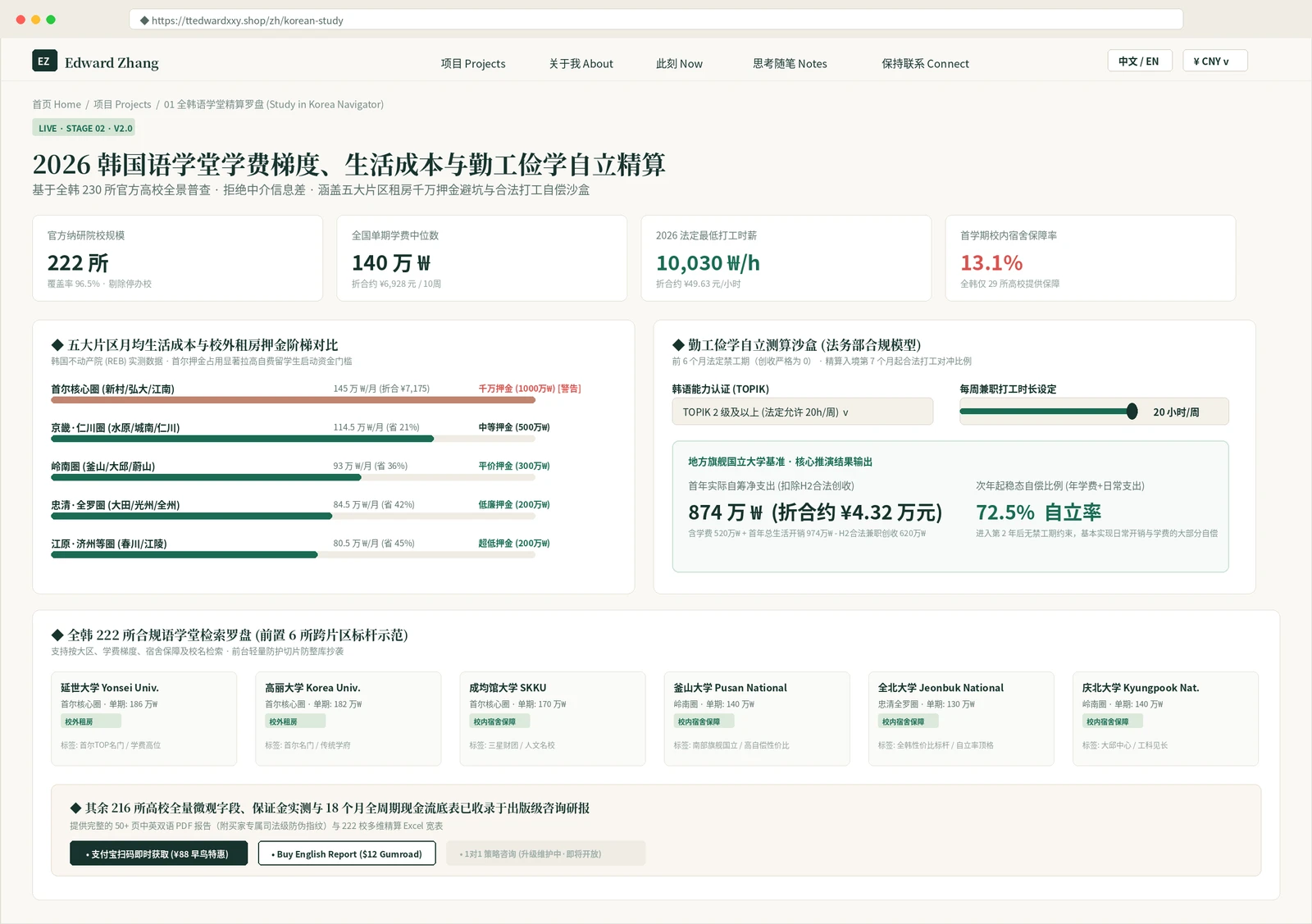
When prospective students prepare their initial reserves, the single most perilous financial blindspot is not tuition, but the housing deposit escrow. In Seoul’s core academic districts (Sinchon, Mapo, Gangnam), standard studio apartments (One-rooms) mandate a mandatory cash deposit of 10,000,000 KRW ($7,380 USD or ¥49,500 CNY) before keys are released.
“A student carrying $15,000 in total liquid reserves will find over 49% of their capital instantly frozen in escrow upon signing a lease in Seoul, drastically impairing their margin of safety.”
Conversely, selecting regional flagship national universities like Jeonbuk National University or Pusan National University requires only 2M to 3M KRW ($1,475 to $2,210 USD) in security deposits, slashing liquidity lockup by up to 80% while offering significantly higher on-campus dormitory placement rates.
3. Immigration Compliance: D-4 Work Permit Eligibility & 6-Month Prior Requirement
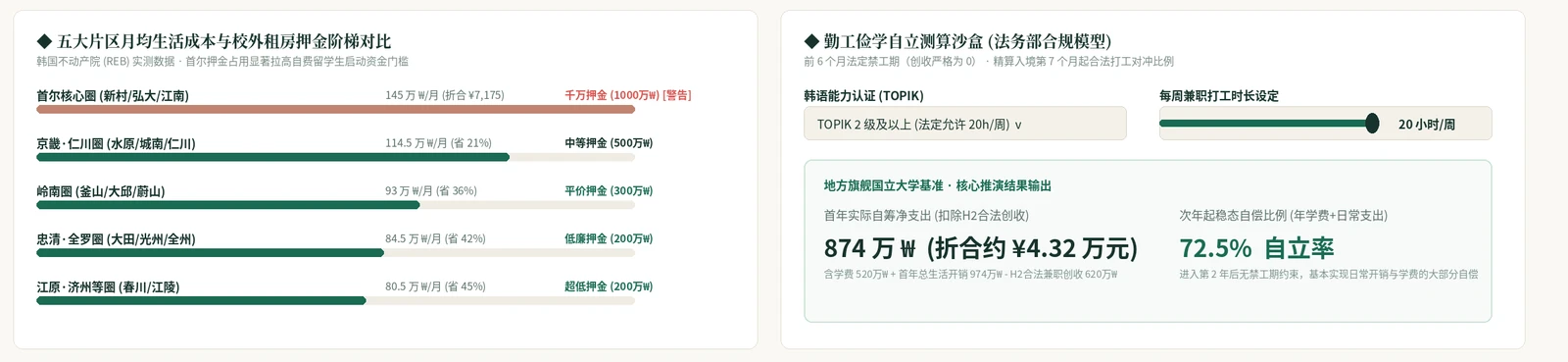
Unscrupulous agents routinely claim that students can immediately fund their studies through casual part-time jobs. In reality, under current Korean Ministry of Justice (Hi Korea) regulations, international students must obtain a prior "Permit for Activities Beyond Visa Status" before commencing any employment. For D-4 language training visa holders, eligibility generally requires completing at least 6 months of study (2 semesters), with attendance records, academic standing, and stay status evaluated alongside university endorsement before working within statutory hour caps and permitted sectors.
Engaging in unapproved part-time work constitutes a violation of Korean immigration regulations, subject to administrative fines or formal departure orders depending on severity. Because official work authorization entails a mandatory 6-month prior qualification and strict attendance criteria, our simulation engine models employment income as zero during months 1 through 6, ensuring applicants maintain sufficient self-funded liquidity reserves.
📌 Official Policy Guidance & Disclaimer: Information compiled from official ROK Ministry of Justice guidelines (verified as of 2026; official document: https://www.immigration.go.kr/bbs/immigration_eng/230/454085/download.do). Approvals are subject to jurisdictional immigration offices and university criteria. For individual cases, call the Immigration Contact Center (1345). Content is for planning purposes only and does not constitute legal or immigration advice.
Experience the Korean Study Navigator
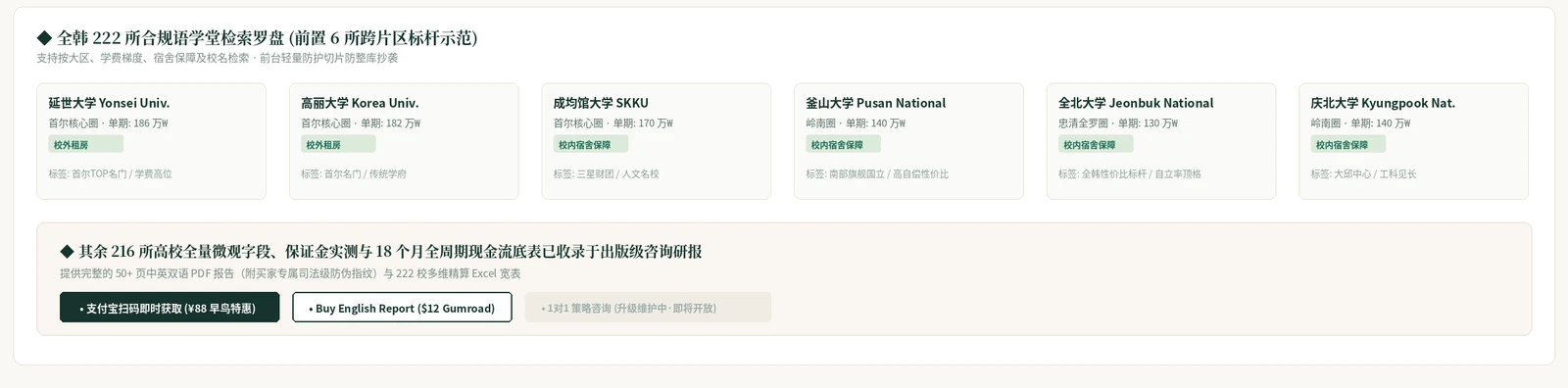
Cut out intermediary markups entirely. Interactively explore tuition benchmarks across 222 universities, evaluate regional rent deposits, and simulate legal work-study cashflows.
Launch Navigator Console ↗